10 Questions to Ask at a Cumbrian Farmers’ Market Before You Buy
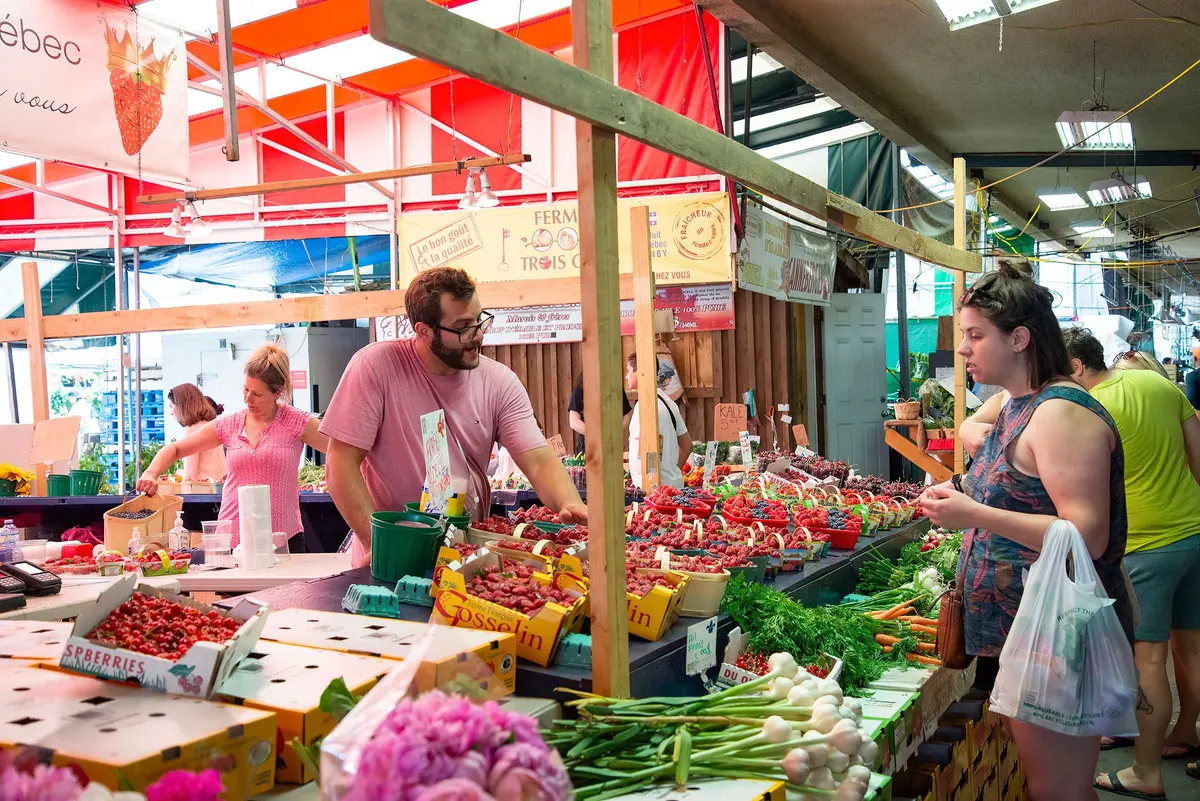
Saturday morning on a Cumbrian market square is one of the better ways to spend an hour. Stalls go up in Kendal, Penrith, Carlisle, Ulverston, Keswick and Cockermouth, and behind most of them stands someone who grew the carrots, reared the lamb or stirred the damson jam. That arrangement is the whole appeal of a farmers' market — and it is also an opportunity plenty of shoppers walk straight past.
A label can tell you a fair amount. A conversation tells you more. Three or four well-chosen questions will settle whether the tomatoes were picked this week, whether the sausages were made on the farm, and whether the price in front of you is fair for what ends up in your bag. Here is what to ask, and how to read the answers.
Start With Provenance, Not Price
Most people begin at the price tag. It is the wrong end of the stall. Work out what you are actually buying first, and the price usually makes sense — or it doesn't, and you move on with your money intact.
Provenance is the thing farmers' markets do better than anywhere else, but only if you test it. "Local" has no fixed legal meaning on a market stall. Some markets insist that produce is grown, reared or made within a set radius; others are looser. What matters is whether the person in front of you can tell you plainly where the food came from, and whether that story holds together.
Ten Questions Worth Asking
You don't need all ten every time. Pick the two or three that matter most for what you're buying — a joint of lamb deserves a different conversation from a jar of chutney.
- Is this grown, reared or made by you? The single most useful question at any stall. A direct answer comes with a name, a farm and a valley. If the answer is "we buy it in", that's not a crime, but you are entitled to know — especially if you came for the grower rather than the reseller.
- Which farm, and roughly where is it? Cumbria is a big county. A farm in the Eden Valley is a long way from Barrow, and food that travelled two hours is a different proposition from food grown ten miles away. Names you can picture — the fell behind the farm, the market town it sits near — are a good sign.
- When was it picked, dug, baked or laid? Freshness varies by product. Bread from this morning, mushrooms from yesterday and salad cut this week are all worth asking about. Eggs in a box carry a best-before date; loose ones don't, so ask when they were laid. Some things genuinely improve with age — cheese, hung beef, stored apples and onions — and a good stallholder will say so rather than pretend everything is hours old.
- What breed or variety is it? Herdwick or Swaledale lamb, a named potato, an old apple variety, a particular tomato: breed and variety shape flavour, texture and cooking time. This is the question that separates someone who knows their stock from someone repeating a sales line.
- How would you cook it? The person selling you a shoulder of lamb has usually cooked it dozens of times. Ask about the cheaper cuts too — shin, brisket, belly, lamb shoulder — and how long they want in the oven. This is often where the real value sits: the cuts that need time are the ones supermarkets sell cheaply and market stalls sell well.
- What's in it, and what isn't? Worth asking about sausages, pâtés, pies, chutneys and cakes. How much rusk, whether there are preservatives or colourings, whether the damsons in the gin came from a Lyth Valley orchard or a catering tub. If you have a serious allergy, ask directly and listen carefully to the answer: small kitchens often handle nuts, gluten and dairy, so cross-contact is possible even when an ingredient list looks clean.
- How long will it keep, and how should I store it? Cheese prefers paper to clingfilm. A whole piece of meat keeps longer than diced. Bread freezes well sliced. Ask before you buy a kilo of something you'll bin on Thursday.
- Is this the last of it? Seasonality in one question. If the asparagus has finished, that's information, not a disappointment — it tells you the stall is selling what the land is actually giving. It also tells you whether to stock up or wait.
- What's best today? An open question that often gets the most honest answer of the lot: a glut of courgettes, a batch of cheese that's just right, a cut that needs eating this weekend.
- Is there a better-value way to buy this? Whole rather than cut, a box rather than three punnets, seconds with a bruise that will vanish in a stew, a larger joint that covers two meals and a stock pot.
Reading the Answers
Specifics are what you want. A stallholder who names the farm, the breed, the week it was picked and the one thing they'd buy themselves is almost always worth returning to. So is one who says "that one's not my best today" or "I'm not sure, I'll ask".
Be wary of the polished non-answer: "it's all local", "from a farm in Cumbria", "we source the best". It may be perfectly true. It just isn't evidence.
Two other things are worth noticing. Pre-packed goods carrying a wholesaler's label, and the same chutney appearing on three stalls under three different names, both point to a supply chain longer than the sign suggests. There is nothing wrong with that trade — small producers have to start somewhere — but it is not the same as buying from the person who made it.
Keep it brief, too. Ask while you're being served, not after, and don't hold up a queue with a full interview. Regulars get better service than strangers, and the way to become a regular is to be quick, friendly and to come back.
Finding Value Without Haggling
The comparison that matters isn't price per kilo against a supermarket. It's what you get for the money: produce picked ripe rather than shipped hard, meat from slower-grown native breeds, bread made in small batches. That costs more to produce, and it shows in the price.
There are still ways to eat well on a budget at a market:
- Buy what's in season and in abundance. August courgettes and September damsons are cheaper and better than anything flown in.
- Ask about bulk. A whole box, a half lamb or a sack of potatoes is often better value than small amounts.
- Learn the cheap cuts. Shank, brisket, shoulder and offal reward slow cooking and cost far less than prime cuts.
- Shop the last half hour. Some stalls would rather sell than pack up, though you can't count on it.
- Use the whole thing. Beetroot tops, cauliflower leaves, chicken carcasses for stock — all money you've already spent.
Don't haggle over a jar of jam. Margins on small-scale food are thin, and the relationship is worth more than the fifty pence. If a price feels too high, ask what makes it that price — the answer is usually informative, and sometimes it changes your mind.
Your Next Market Morning
Take cash as well as a card, a sturdy bag, and a cool bag in summer. Go early for choice, late for leftovers. Know roughly what's in season before you set off, so you're not disappointed when the strawberries have gone.
Write down the names of the stalls you liked. If you're planning a special meal, ask whether they take orders and will bring a particular cut or a box of fruit to the next market. Then next time, ask one more question than you did last time. That's how a Saturday browse turns into a proper supply of good food.
Photo: @coldbeer / Pexels